Choosing Between a Coat Stand and a Hall Closet
Compare a coat stand and hall closet for your entryway, then choose storage that keeps everyday coats easy to reach without crowding the room.
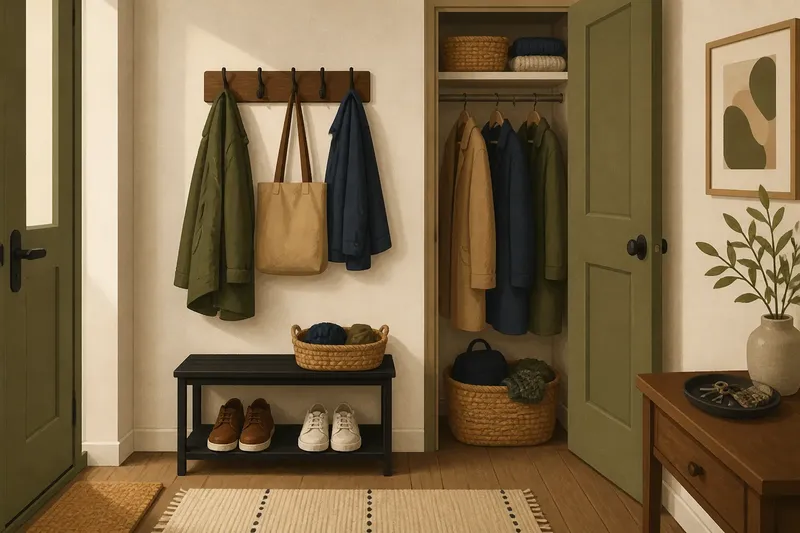
The most common entryway mistake is choosing a coat stand or hall closet for its appearance before checking how people actually arrive. Coat stand versus hall closet is a practical choice: the wrong fit leaves bags on the floor, coats in the way, or a door people avoid opening.
Visible storage
A coat stand or wall-mounted hook rail gives coats a direct landing place. Guests can see where to hang a jacket, and household members can drop a bag without opening a door or finding a hanger.
The tradeoff is that every item stays in view. A crowded rail can make a small entrance feel busy, while damp outerwear may need room to dry before it is put away. Choose sturdy hooks suited to the items you intend to hang, and leave enough clear floor around a freestanding stand.
Enclosed storage
A hall closet hides coats behind a door and can make the entry look calmer. Its usefulness depends on what is inside: a bar for hangers, hooks for bags, and a reachable shelf or basket for smaller belongings can keep the space functional rather than merely concealed.
Consider the door’s swing and how easily it opens when someone is carrying groceries or helping a child. If coats are damp, avoid packing them tightly into a closed space; let them dry appropriately before storing them. A closet that is awkward to use may send its contents back onto chairs and hooks.
Matching the entry
Start with the household’s routine, not an abstract preference for a tidy wall. Note who uses the entrance, which items arrive with them, and whether visitors need an obvious place to leave a coat.
- Check whether the floor has room for a freestanding stand; if its base would obstruct the walking path, choose a wall rail or hooks instead.
- Check whether the closet door opens without striking furniture or blocking the entry; if it does, use accessible wall hooks or reconsider the door arrangement.
- Check whether the closet has usable hanging space and a reachable place for bags; if either is missing, add suitable hooks or a basket, or reserve daily items for open storage.
- Check whether coats can hang without pressing against one another; if they cannot, reduce what is stored there or use a separate drying place for damp garments.
- Check whether the household needs a quick landing place for keys, hats, or gloves; if so, add a tray or shallow basket near the chosen coat storage.
- Check whether mounting a rail is suitable for the wall and allowed in your home; if not, choose a stable freestanding option or an appropriate removable product.
Questions about coat storage?
Is a coat stand better for a small entry?
It can work when the base fits without narrowing the route through the doorway. If floor space is tight, wall hooks or a slim rail keep storage close to the wall.
Does a hall closet need special fittings?
Not necessarily, but its contents should match the household’s belongings. A hanging bar suits coats on hangers, while hooks and a basket can make bags and smaller items easier to put away.
Can open and closed storage work together?
Yes. A few visible hooks can hold coats in daily rotation, while a closet keeps other outerwear out of sight. This arrangement can reduce both closet-door traffic and crowding on the hooks.
Where should damp coats go?
Give them room to dry rather than crowding them into a closed closet. Follow the garment’s care instructions and use a suitable place where moisture will not damage nearby surfaces.
A worked entryway choice
Say you share a narrow entry with a housemate, and the existing closet door opens into the path from the front door. In this invented situation, you begin with two daily coats, two bags, and a small wall section beside the closet; the closet has a hanging bar but no hooks for bags.
- Check the route with the closet door open. It blocks the path, so you decide not to rely on the closet for daily arrivals.
- Check the available wall section for a suitable mounting location. If the wall and household rules permit it, install a short hook rail there; if not, choose a stable freestanding stand that does not block the route.
- Give each person a hook for a coat and a separate hook for a bag. The visible result should be two distinct landing spots, rather than bags resting on the floor.
- Use the closet for less-used outerwear, keeping the daily items on the rail. The tradeoff is a more visible entry, but the blocked closet door no longer interrupts the everyday routine.
Make the choice last
Materials and installation shape how storage feels and functions. Painted wood can blend with the wall; metal hooks can make a rail read as a deliberate feature. For a rental, check permission before drilling and follow the product’s mounting instructions; a removable or freestanding option may be more suitable.
For coat stand versus hall closet, the best fit is the one that gives each daily item a reachable place without obstructing the entrance. Keep the items used constantly easy to grab, and store the rest where the door, hooks, and available space let them go away without a daily struggle.