The Clear Route Through a Room: How Furniture Placement Shapes Movement
A clear route through a room makes daily movement less awkward. Learn how to spot pinch points and arrange furniture around the paths your household uses.
The most common furniture-placement mistake is arranging every piece around a focal point, then leaving the everyday route to the kitchen tangled through the seating area. A clear route through a room helps people move without interrupting someone reading, carrying a meal, or settling in for the evening.
Instead of chasing an empty strip of floor, look at what people carry, where they pause, and which pieces are easy to move. A room can feel more welcoming when its paths support its routines, even if the route bends around furniture.
Map The Room’s Crossings
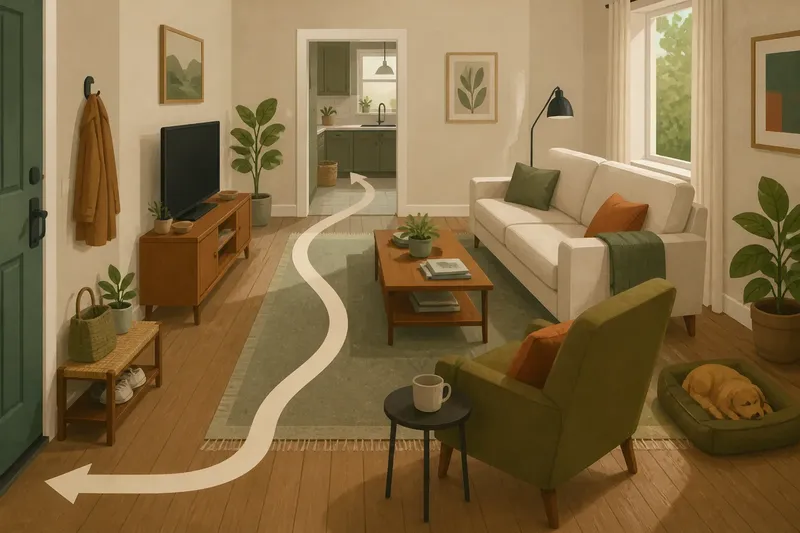
Say Maya shares a rectangular living room with her partner and a dog. The front door opens at one end, and a kitchen doorway sits along the opposite wall. A sofa faces the television, an armchair fills the window corner, and a coffee table sits between them. The usual walk to the kitchen cuts across the table and the dog’s favorite resting spot.
Maya sketches the doorways and furniture on paper, then adds lines for the trips people make: carrying groceries from the entrance, walking a bowl to the kitchen, and reaching the armchair. She marks where someone pauses to remove shoes and where the dog tends to lie down. The drawing shows that the problem is not every piece of furniture; it is the repeated crossing through one busy patch.
She circles the trips that happen most often and notes which objects move easily. That gives her a practical order of operations: try shifting the coffee table before tackling the heavier sofa, then check whether the chair or rug still catches the route.
Shift The Small Pieces
Maya slides the coffee table toward the sofa, leaving its top within reach from the seats while opening a less direct but clearer way to the kitchen. She walks that route with a light laundry basket. The table is still useful, but now it sits a little farther from the armchair, so she turns the chair toward the sofa to bring the seating group back together.
She also moves the dog’s cushion beside the window, outside the main crossing. In this invented situation, the starting point is a route that cuts through the coffee table and the dog’s resting spot; the actions are shifting the table, turning the chair, and relocating the cushion. The expected visible result is a path that skirts the seating area, with fewer forced detours and the table still reachable from the sofa.
Before moving a bulky piece, Maya checks whether its new position would block a door, outlet, or another route. If it would, she returns it and tries a smaller adjustment instead. The aim is not a perfectly straight corridor; it is a route whose turns feel deliberate rather than accidental.
Keep Paths Easy To Read
A route is easier to follow when its start and destination remain visible. Maya avoids putting a small stool in the middle of the entrance-to-kitchen crossing. She places a floor lamp beside the sofa rather than where people turn, and keeps a plant tucked near the wall instead of in the natural line of travel.
Rugs can help distinguish a sitting area from a passage, but their edges need attention. Maya checks that the rug does not curl or shift where someone turns toward the kitchen. If its edge keeps catching feet, she changes its position or uses a suitable rug pad rather than treating the raised edge as part of the route.
The sofa’s open side now faces the approach from the entrance. A visitor can see how to join the seating area without threading between the coffee table and the chair, while the path onward to the kitchen remains apparent.
Check The Layout In Use
Maya checks the new arrangement during an ordinary evening, not just while the room is empty. She carries a basket toward the kitchen, sits in the armchair, and asks her partner to walk from the entrance to the sofa. She watches for chair corners, table edges, and places where the dog’s usual movements meet the household’s path.
One snag remains: the armchair’s back brushes a passing bag. Maya turns the chair slightly toward the sofa and shifts the side table beside it. The chair stays near the window, but the route feels less cramped and the table still gives the seated person somewhere to set down a drink.
Use this quick check after each rearrangement:
- Notice whether a doorway or cabinet door meets a chair or table; if it does, move that piece out of the opening, or restore its previous position and adjust a smaller object instead.
- Notice whether the usual trip to the kitchen cuts through the center of the seating group; if it does, shift a movable table or chair to make the route skirt the group, or prioritize the busiest crossing if no alternative fits.
- Notice whether someone carrying a bag or basket brushes a furniture corner; if they do, turn or move that piece, or keep it in place and redirect a less-used path.
- Notice whether a rug edge lifts or shifts where people turn; if it does, reposition it or add a suitable rug pad, or move the turn away from that edge.
- Notice whether the dog’s resting place overlaps the main route; if it does, relocate the cushion to a quieter edge, or preserve the spot and route other traffic around it.
- Notice whether a side table or lamp blocks the approach to a seat; if it does, move it beside the seat rather than in front, or choose a smaller object that leaves the approach open.
If a layout still feels awkward, change one movable item at a time and repeat the same ordinary trip. That makes it easier to tell which adjustment helped and which merely moved the obstacle elsewhere.
Questions About Room Routes?
How can I tell if a route is clear?
Walk the route you use most while carrying an everyday object, such as a laundry basket, and notice whether you have to twist, sidestep, or pause for someone seated nearby. If the trip feels strained, look for the specific corner or crossing that causes it.
Does a room route need to be straight?
No. A gentle bend around a sofa or table can work if the destination stays easy to spot and the turn avoids another activity area. A short, legible curve is often more useful than a straight line through the middle of a conversation or reading spot.
What if every path crosses the seating area?
Make the most frequent trip the priority and see whether one chair or movable table can shift its course toward the edge of the seating group. If the room offers no better path, keep the crossing predictable and avoid placing small loose items along it.
How do I make a small room easier to cross?
Start with objects that interrupt a regular trip, such as a floor basket or side table, and test moving them before replacing larger furniture. Keep needed items close to the activity they support, but leave the most-used crossing free of items that can be relocated.
Let Daily Movement Lead
A clear route through a room comes from noticing how people actually use it, then placing furniture so movement and sitting can coexist. Maya’s living room remains a living room, not an empty passage: the sofa, chair, table, and dog’s cushion still serve their purposes, but no longer occupy the same busy patch.
When a room feels awkward, trace one ordinary trip before buying anything or copying a floor plan. The useful adjustment may be a modest turn of a chair or a new home for a basket; check that the route works alongside the room’s other routines, and let that evidence guide the next move.